The NLWS Blog
Reading the NLWS blog provides insights into wildlife conservation, sanctuary activities, and animal stories, fostering awareness and understanding of wildlife and conservation issues.
GRASSY PLAINS RESCUE!!!


On September 1st, we received a call from a Conservation Officer giving us permission to capture a young black bear cub near Grassy Plains. Reaching the area is not a quick trip for us — even under ideal conditions it takes roughly two and a half hours and includes a ferry crossing. With other animals already requiring our attention that day, we were unfortunately unable to respond immediately. Later that same day, however, we received another call, this time from a member of the public who had found the cub beside the road and had been able to pick her up by hand. That immediately raised serious concerns. A healthy wild bear, even a young one, should normally be alert, wary of people and very difficult to approach.
When a wild animal is weak enough to simply be picked up, it is often an indication that something is very wrong.
We rearranged our schedule so the cub could be collected first thing the following morning and brought her to the Shelter as quickly as possible. When she first arrived, she was extremely thin and clearly weak, but otherwise appeared reasonably stable. Unfortunately, appearances can be deceptive with wildlife. Wild animals instinctively hide signs of illness and weakness for as long as they can, and sometimes a patient that seems relatively stable can deteriorate with frightening speed once their remaining reserves are exhausted. That is exactly what happened here. Her condition worsened rapidly, and by the following morning she had become unconscious.
Our team is now pulling out all the stops and using every supportive-care method available to give this little bear the best possible chance of surviving whatever her body is fighting. At this stage, we do not want to speculate about the underlying cause of her condition; our priority is simply to stabilize her, support her body and respond to her needs as they develop. Cases like this are a difficult reminder that wildlife in serious distress does not always look dramatic at first. Sometimes the most important warning sign is simply an animal behaving in a way that a healthy wild animal normally would not. We are hoping that this little cub still has enough strength left to fight her way back.

Could You Spot the Warning Signs?
Wild animals don't always show distress in obvious ways. Explore the photos, then test what you would do.
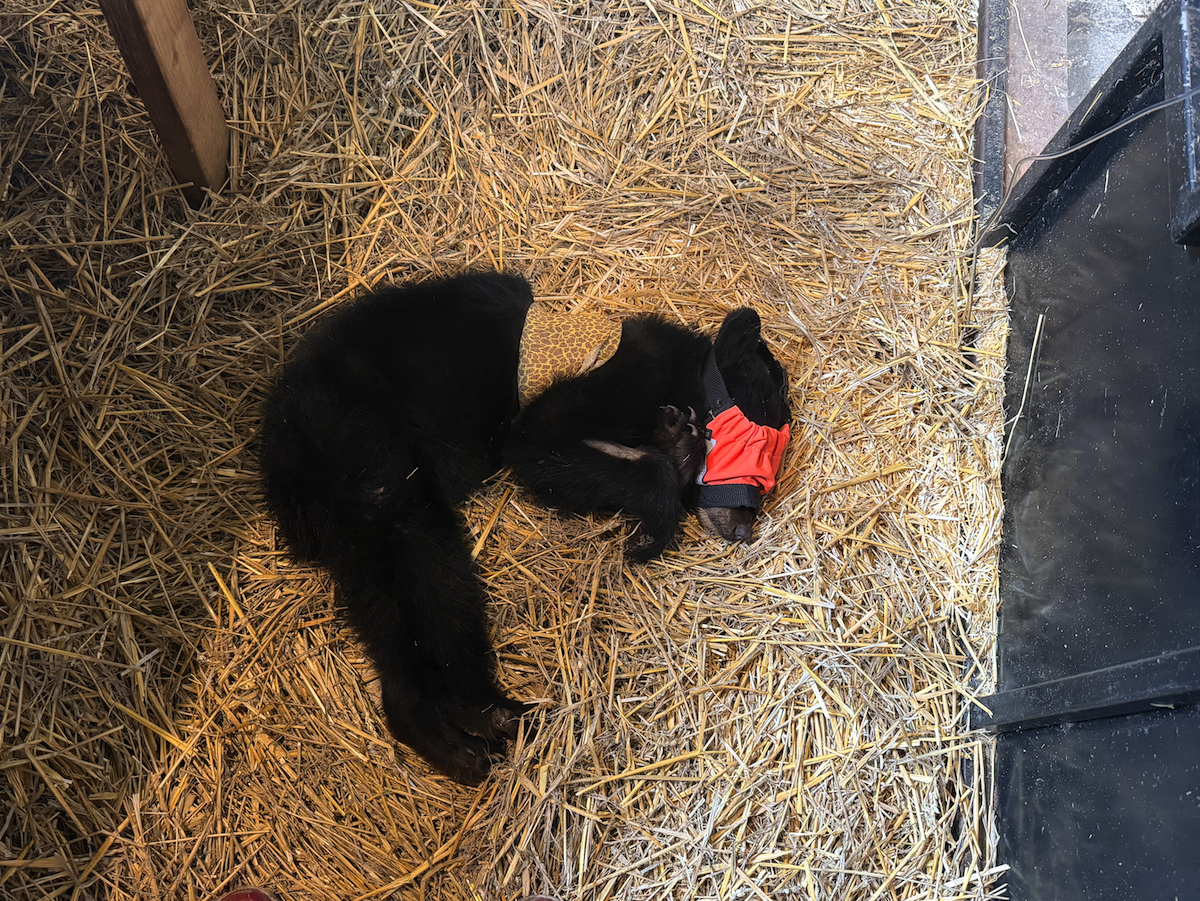
Extreme weakness, illness, injury or exhaustion can prevent an animal from reacting normally to people.
You find a young bear alone beside a road.
Watch from a safe distance and note unusual behaviour.
Quiet does not necessarily mean calm, tame or healthy.
Let trained wildlife professionals determine the next step.
Related posts
Here are some related posts we think you might find interesting!

Summer 2026: A Season of Rescues, Releases and New Beginnings

My NLWS Experience

⚠️ 🐻 Important Omineca Dispute Update
Your Donations Save Lives!
Your donation saves Lives Donating to Northern Lights Wildlife Shelter saves wildlife by providing crucial resources for their care, such as food, shelter, and medical treatment. The shelter rescues and re-wilds injured or orphaned wildlife, giving them a second chance at life. Your donation can directly contribute to the well-being and survival of these vulnerable species.
